Blog
Forest Spirits and How to Call Them

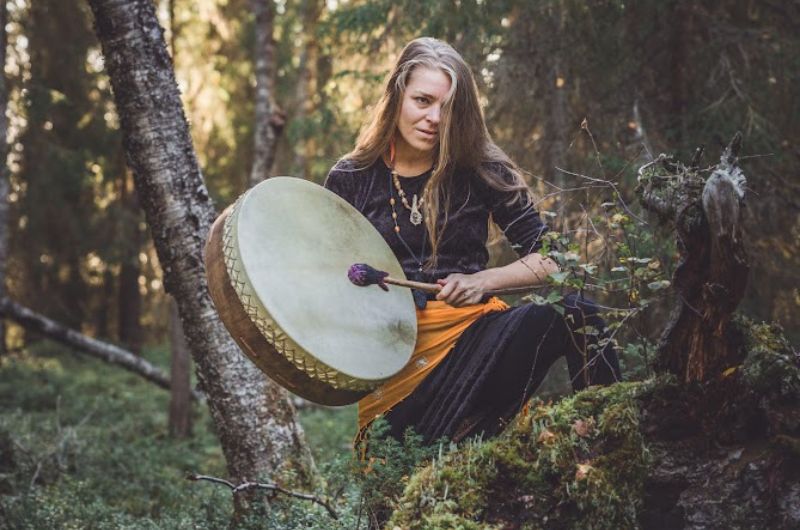
There’s something you should know about us Finns: we never quite stopped believing in magic. Oh, we’ll talk about technology and modern life like anyone else, but scratch the surface and you’ll find we still leave porridge for the house spirits at Christmas, still feel a shiver when walking past certain stones in the forest, and still – perhaps unconsciously – drum in rhythms our great-grandmothers would recognise. You see, when over 70% of your country remains forested and your ancestors spent thousands of years in intimate conversation with the spirits dwelling within those woods, that kind of connection doesn’t simply disappear because someone invented the mobile phone.
Tapio and His Folk
In the oldest tales, Tapio rules the forest like a wise patriarch, like a deeply-rooted old pine whose crown reaches the clouds whilst its roots wind deep into the earth’s depths. His wife Mielikki is the forest’s mistress, a protective embrace wrapped in maternal love, who watches over animals and guides the lost back to safe paths. Their son Nyyrikki is the god of hunting, swift as a deer bounding across a clearing, and daughter Tuulikki tends berries and mushrooms like a careful housewife.
Tapio wasn’t a distant god worshipped within gilded walls. He was present in every step pressing into moss-covered forest paths, in every hunting moment, in every berry-picking journey when hands stained purple with bilberry juice.
Forest Guardians and Stone Spirits
Each woodland area had its own forest guardian – a spirit who might appear sometimes as an old man in a grey coat like autumn dressed in mist, sometimes as a beautiful woman in a green dress like spring’s first birch coming into leaf, sometimes as merely the feeling that wise eyes observe every movement.
The forest workers of old learnt to read the forest guardian’s language like experienced fishermen read the lake’s surface. Some forests favoured quiet, respectful movement like a mouse hidden in moss. Others tolerated louder sounds and livelier activity like a family picnicking on a sunny summer’s day.
The forest guardian rewarded respect like a berry gives sweetness to one who knows to wait for proper ripeness, and punished arrogance. A solitary traveller who greeted the forest upon entering like an old friend and gave thanks when leaving always found the path home. But one who came to the forest indifferently or arrogantly like cold winter wind might become lost like mist obscures even familiar paths.
Great stones – especially those whose shape was exceptional like nature’s own sculpture – were homes of the kivenhaltijat (stone guardians). These ancient beings remembered times before humans, times when glaciers shaped our land like giant hands, and their wisdom ran deep as groundwater that flows hidden from sight yet nourishes all roots.
Springs and pools were the realm of vedenhaltijoiden (water guardians), clear as crystal and secretive as night in their depths. Respect for these beings was vital as life itself, for pure water was life’s prerequisite. Traditional ways – how one approached a spring quietly as entering a sacred place, how one drank gratefully, how one gave thanks – were practical ecological wisdom: ways to ensure water sources remained pure for all living things.
The House Spirit: Family Guardian
The house spirit dwelt in every home and yard like warm breath living in every corner. He was part of the same worldview where every place had its own soul, its own consciousness, like every flower has its own scent.
A proper house spirit cared for home and livestock like an old dog watching over its family, but only if the family treated him with respect. Christmas porridge wasn’t sacrifice but gratitude – acknowledgement that humans didn’t dwell alone but shared their roof with invisible neighbours.
Practical Wisdom in Mystical Garb
In light of modern science, these beliefs blossom forth as surprisingly wise. Forests are indeed complex, communicating networks like an underground internet. Trees share nutrients and warning signals through their root systems like friends sharing food and news.
The people of old didn’t know about mycorrhizal networks, but they understood with their hearts what ecologists have begun proving: forests are living wholes with their own “intelligence” like a flock of birds moving as one being.
Respect for forest spirits taught people to move through forests in ways that didn’t disturb their natural rhythms. It taught observation of subtle signs – when the forest was receptive to human activity and when it was best left alone to recover.
With industrialisation, these traditions began to seem old-fashioned. Modern humans were encouraged to see nature merely as a source of resources, like forgetting a tree’s beauty and seeing only timber.
But something profound was lost like a spring running dry. We lost a way of being in nature that was not only sustainable but also personally fulfilling and spiritually nourishing like clear spring water to a thirsty traveller.
The Invitation to Relationship
So how do you drum with Finnish forest spirits? Begin simply:
1. Find a place in nature that feels alive to you – it might be a single ancient tree in a city park or a vast wilderness clearing.
2. Sit quietly for a moment and listen to what rhythms are already present. The wind has a rhythm. Your heartbeat has a rhythm. The place itself has a rhythm.
3. Gently, let your drum join the conversation. Don’t impose your own agenda – instead, discover what rhythms want to emerge in this particular place, with these particular trees, in this particular moment. Pay attention to how the forest responds. Does your drumming seem to deepen the silence that follows? Do birds change their behaviour? Do you notice subtle shifts in the quality of light or air?
This is how you develop relationship with the invisible ecology of any landscape – through respectful presence and patient listening. Traditional practitioners would often spend considerable time in a location before beginning to drum, learning the particular “personality” of that forest area and what kind of rhythmic dialogue felt most appropriate.
What makes the Finnish approach to forest spirits and drumming so relevant today is its essential practicality. These traditions emerged not from abstract philosophy but from the daily reality of people who lived intimately with the natural world. They developed ways of moving through forests that enhanced both human wellbeing and ecological balance.
In our current climate of environmental crisis and urban disconnection, these ancient practices offer something invaluable: a technology for remembering our place within, rather than above, the living world. When you drum in recognition of forest spirits, you’re not engaging in primitive superstition – you’re practicing a sophisticated form of ecological awareness. You’re developing the sensitivity to notice what the forest needs from you and what it has to offer in return.
The forest is always listening. The question is: are we?
Related Posts

The Forest Listens — The Karelian Lament Tradition

There are things that are hard to say out loud. Grief that doesn’t fit into words. Exhaustion too deep to explain. Feelings that circle inside us with nowhere to go.
Throughout human history, people have taken these things into nature. Not because nature provides answers. But because it receives. Quietly, without judgement, without advice.

Forest Bathing with Your Shamanic Drum
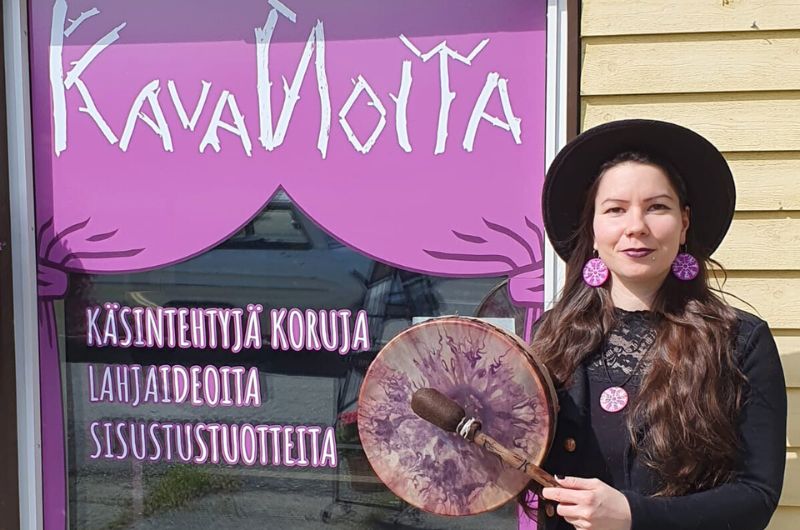
Rumpu-ukko Partners with KavaNoita in Sodankylä
Sometimes the universe has a wonderful way of bringing kindred spirits together. That’s exactly what happened when we discovered Marjo Kavakka’s KavaNoita boutique in Sodankylä.
Planning a trip to Lapland? Now there’s an enchanting new reason to stop by Sodankylä. At KavaNoita boutique, you can experience the perfect blend of our shamanic drums and Marjo’s mystical jewellery – two crafts that share the same spiritual depth and connection to ancient wisdom.
Ancient Vibrations Meets Modern Wellness: Discover Sound Healing
In a world where our senses are constantly bombarded, where screens flicker and notifications ping, there exists an ancient remedy that speaks directly to our very cells: sound healing. This practice, as old as humanity itself yet perfectly suited to our modern needs, offers a natural path to wellness that resonates with practitioners and clients alike.
It Is Talking to Me…A Winter Journey with Shamanic Drums
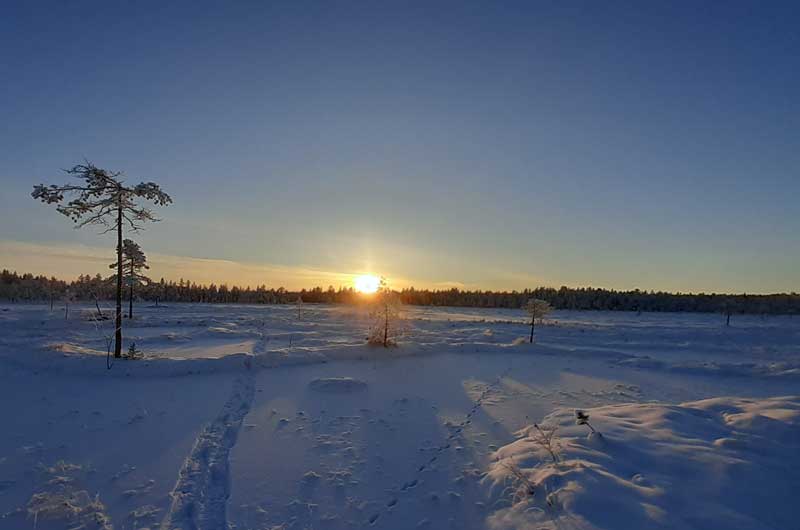
The snowshoes crunch on the frost-covered snow. The old path through the forest has nearly vanished after last night’s snowstorm, and I can only see occasional depressions in the snow to guide my way. There’s no danger of getting lost, however; I’ve traversed this forest strip so many times that I could almost navigate it blindfolded. The snow is already over half a metre deep, so I take care not to slip off the path, which happens if one steps from the compacted base into the soft snow.