
Blog
What Lies Beneath: Finnish Water Spirits, Shamanism, and the Sacred Lake

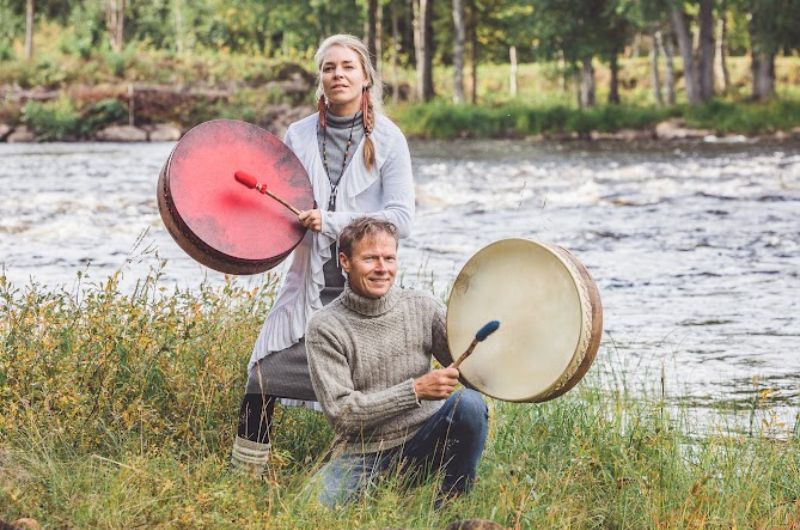
Stand at the edge of a Finnish lake in late May. The ice has only recently gone. The water is cold enough to ache and quiet enough to hold your reflection like something precious. A loon calls, once, and then there is silence so complete you can hear your own heartbeat.
Finland holds approximately 188,000 lakes. These are not incidental features of the landscape — they are its architecture, its memory. For the people who have lived among them for thousands of years, the lakes have never been merely water. They have been worlds.
The Mistress of the Waters
In traditional Finnish folk belief, water was never empty. Every lake, river, and spring held its own spirit — its own will. The most powerful of these presences was Veden emäntä, the Mistress of the Waters, also known as Vellamo. She was the feminine guardian of lakes and seas: fishermen appealed to her before setting out, and those who drowned were sometimes said to have entered her realm — a world beneath the surface that mirrored the world above, complete and governed by its own laws.
The Kalevala weaves water throughout. The world itself begins in water, formed from a duck’s egg on the knee of Ilmatar, the spirit of the air, floating on the primeval ocean. Väinämöinen — Finland’s great shamanic hero — is born from the sea. Creation, in the Finnish mythological imagination, rises from the deep. Lesser spirits populated the margins too: näkki, shapeshifting and dangerous at dusk; vetehinen, ambiguous and sometimes sought by healers. These were not fairy tales. They were maps of a relational world — a reminder that nature had interiority, and that you were always in relationship with it.
The Drum at the Threshold
In Finnish shamanic tradition, the tietäjä — ‘one who knows’ — understood the landscape as layered. Certain places were thin: where the membrane between the visible and invisible worlds could be crossed. Water was consistently such a place. The still surface of a lake was a threshold in the cosmological sense — to look into it was to look into another world, and to journey in trance across or into its depths was a recognised form of shamanic travel.
The Sami noaidi worked with a drum — the goavddis — whose imagery mapped the entire cosmos, including the watery realms beneath. The drums made at Rumpu-ukko are inspired by these traditions, interpreted respectfully as living craft. The reindeer hide stretched across the frame carries something of this history. When you play such a drum at the water’s edge, you are playing within a lineage of listening.
What the Research Tells Us
The reverence our ancestors felt for water was not irrational. Contemporary research is beginning to measure what traditional cultures encoded in myth. Marine biologist Wallace J. Nichols coined the term ‘Blue Mind’ for the mildly meditative state the brain enters near water — characterised by reduced stress hormones, lower activity in the mind’s restless default network, and increased feelings of calm and connectedness. Other studies published in NLM and by the European Centre for Environment and Human Health confirm that even brief time near lakes or coastal water produces measurable improvements in mental wellbeing.
Finland has long understood this instinctively. The mökki tradition — the summer cottage almost always beside a lake — is not merely holiday habit. The sauna followed by a plunge into cold water is a ritual of renewal: heat into cold, interior into open, the self momentarily dissolved and re-emerged. The shamanic drum and the waterside share this quality. Both invite you to stop, to become porous to something larger than your ordinary thoughts.
The Ice Lets Go
In Finland, the moment the lake ice finally breaks in spring — jäidenlähtö, the going of the ice — carries its own gravity. For communities that lived through long dark winters, the thawing of the lakes was the return of the world. In some regions, the first ice-free water was used in folk healing, believed to carry particular potency at this liminal moment of transition.
Liminality is where shamanic practice has always operated. The drum does not take you somewhere entirely other — it takes you to the edge, and then a little beyond. The thawing lake is one of nature’s most eloquent liminal moments: the world opening again, memory held all winter in ice finally flowing free.
You do not need to believe in Veden emäntä to stand at a Finnish lake and feel that something there is paying attention. But knowing the stories changes how you stand. It gives the silence a context. It makes your own listening feel less eccentric, more ancestral.
This summer, bring your drum to the water. Let the rhythm move across the surface. Notice what moves in you in return. The water has been here a very long time. It knows how to listen.
Related Posts
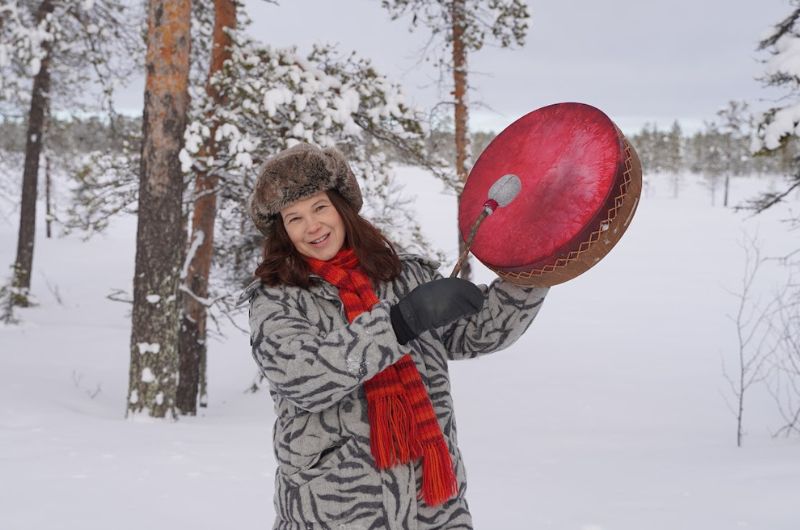
Finding Love in Unexpected Places: Your Drum as a Companion

With Valentine’s Day approaching, I’ve been reflecting on friendship, connection, and the many forms love takes in our lives. Here in Finland, we actually celebrate this day a bit differently – we call it Ystävänpäivä, Friend’s Day. Rather than focusing solely on romantic love, we honour all the meaningful connections in our lives: friends, family, and yes, even the relationship we have with ourselves.
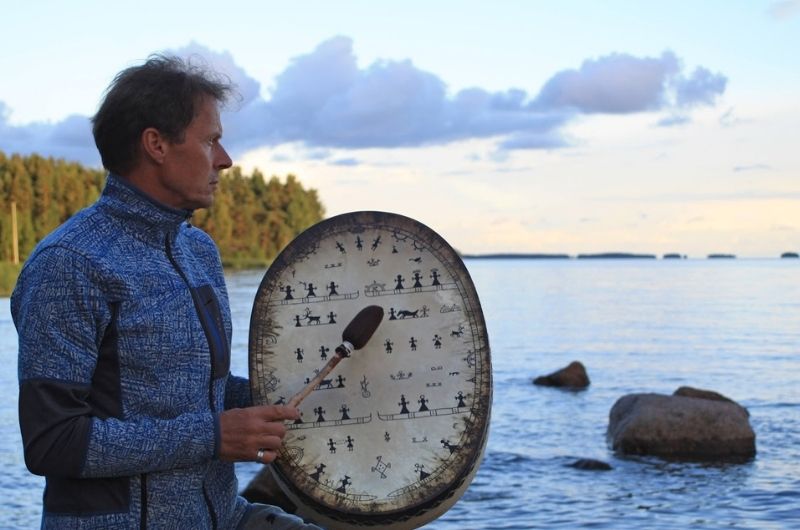
The Power of Words: The Finnish Tietäjä Tradition
Have you ever noticed how certain words, when spoken with intention, seem to carry weight? How a whispered blessing can calm a crying child, or how the right phrase at the right moment can shift an entire day? The old Finnish shamans – the tietäjät – knew this intimately. They were called “the knowing ones” not because they possessed secret knowledge, but because they understood something profound: words, when combined with rhythm and intention, become medicine.
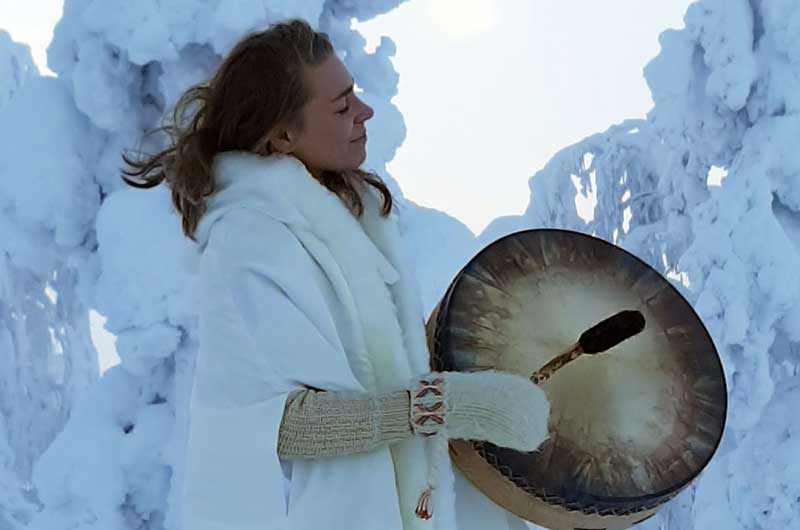
Christmas Panic Approaching – Remember This!

As Christmas draws near, panic tends to strike. Is everything ready? Is everything tip-top, corners scrubbed, and casseroles prepared? Everything should be more finished, tidier, and “just right.” Meanwhile, the to-do list grows longer, even though this time of year our souls long to slow down.
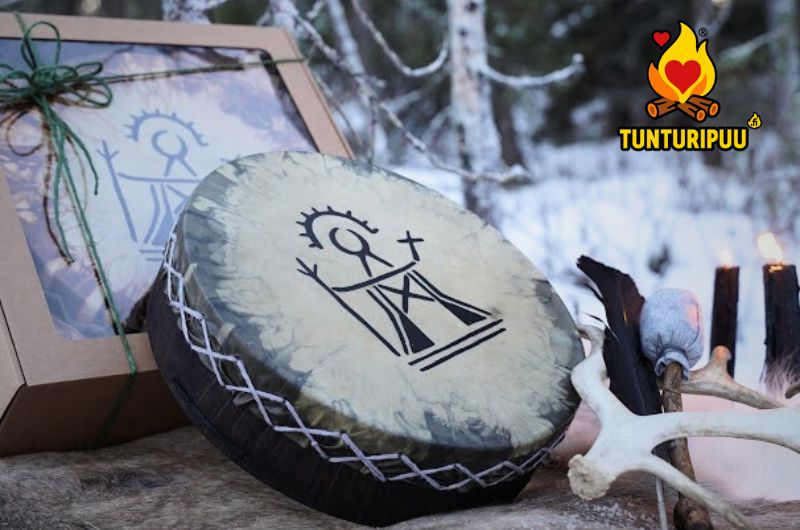
Rumpu-ukko´s Sami Drums Now Available at Tunturipuu Online Store
When Body and Mind Become Overloaded – Try Drumming
The Sacred Rhythms of Sápmi
In the vast wilderness of Finnish Lapland, where the aurora borealis dances across endless skies and reindeer migrations have carved pathways through time itself, the haunting resonance of traditional Sami drums once guided shamans between worlds. Today, contemporary craftspeople are breathing new life into this ancient tradition, creating instruments that honour the past whilst speaking to modern souls seeking connection with something deeper than themselves.

Forest Bathing with Your Shamanic Drum
Everyday Shamanism: How to Easily Deepen Your Nature Connection
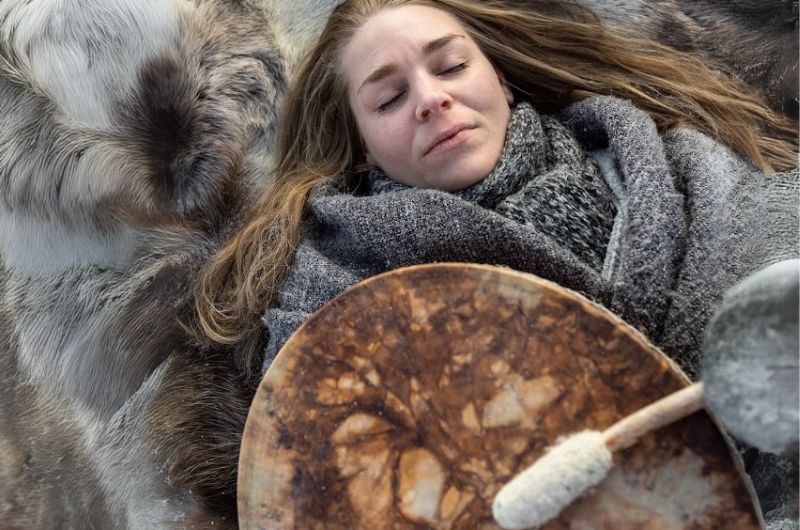
Ancient Vibrations Meets Modern Wellness: Discover Sound Healing
In a world where our senses are constantly bombarded, where screens flicker and notifications ping, there exists an ancient remedy that speaks directly to our very cells: sound healing. This practice, as old as humanity itself yet perfectly suited to our modern needs, offers a natural path to wellness that resonates with practitioners and clients alike.
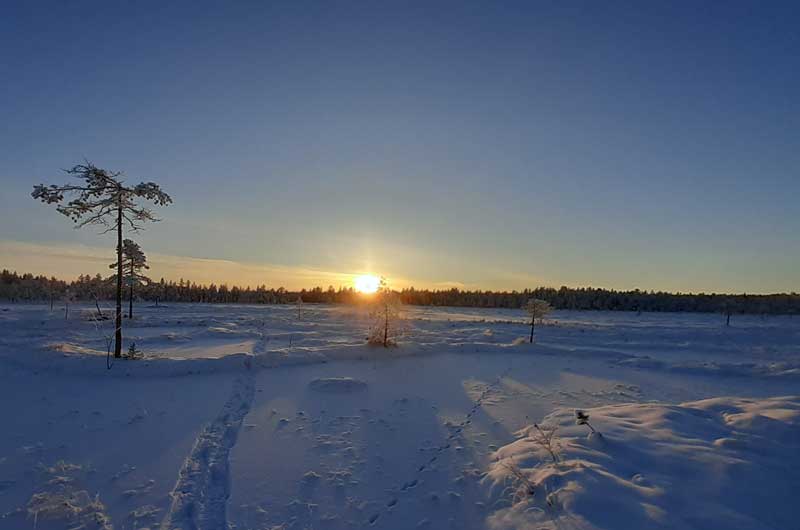
It Is Talking to Me…A Winter Journey with Shamanic Drums
The snowshoes crunch on the frost-covered snow. The old path through the forest has nearly vanished after last night’s snowstorm, and I can only see occasional depressions in the snow to guide my way. There’s no danger of getting lost, however; I’ve traversed this forest strip so many times that I could almost navigate it blindfolded. The snow is already over half a metre deep, so I take care not to slip off the path, which happens if one steps from the compacted base into the soft snow.

The Beat of Wellness: Discover the Healing Power of Drumming
In our fast-paced world, feelings of anxiety and frustration can often overwhelm us. Today, we’d like to share a simple yet effective method to combat these negative emotions: drumming!

Embracing the Wisdom of Winter’s Darkness
Here, above the Arctic Circle, darkness envelops us like a thick, warm blanket. The sun now graces us with its presence for six hours a day. While mainstream media bombards us with tips on how to “stay energised” during these dark months, we’d like to offer a different perspective, one that aligns with ancient wisdom and the natural world.
