Blog
The Forest Listens — The Karelian Lament Tradition

There are things that are hard to say out loud. Grief that doesn’t fit into words. Exhaustion too deep to explain. Feelings that circle inside us with nowhere to go.
Throughout human history, people have taken these things into nature. Not because nature provides answers. But because it receives. Quietly, without judgement, without advice.
Nature doesn’t ask you to be strong
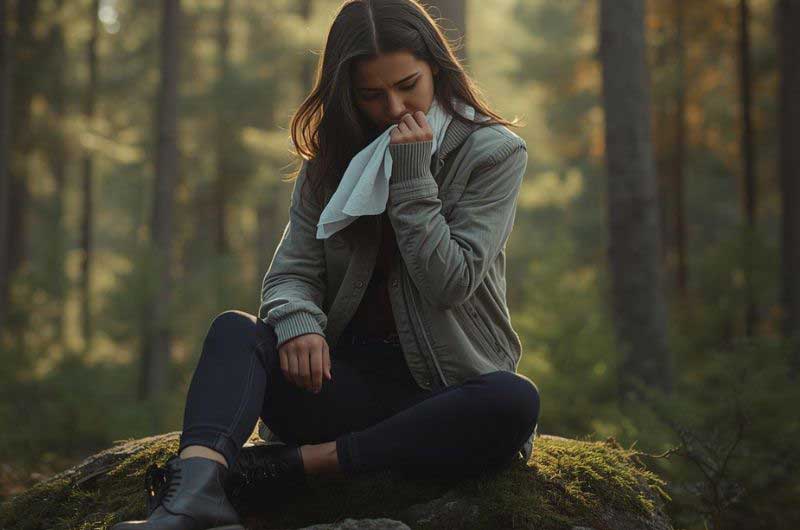
In the forest, there’s no need to explain yourself. No need to smile or hold yourself together. The trees expect nothing of you. You can sit on a rock and simply feel — for as long as you need to.
This is not a new idea. It reaches back centuries, into one of Finland’s most profound and little-known folk traditions: the Karelian itkuvirsi.
Itkuvirsi — literally “crying song” or “lament” — is an ancient Finnish and Karelian vocal tradition in which grief, longing, and loss were given voice through improvised, melodic weeping.
These were not performances. They were a deeply personal and socially recognised way of processing emotion, practised primarily by women at times of great transition: funerals, weddings, farewells. The tradition is rooted in the belief that raw, unfiltered feeling deserves to be heard — and that giving it sound is itself a form of healing.
Women would go out into the forest to pick berries — and weep there, releasing what they could not show anywhere else. The forest was their listener when no other was available.
As visual artist and itkuvirsi guide Marjo Akkanen describes it: “It always has a listener. And that listener has been enough — even when it was nothing more than the trees of the forest.”
Sound reaches where words cannot
Marjo has worked with itkuvirsi since 2017. She has trained as a nature connection guide and is currently studying to become a therapist. In her work, she brings together voice, body, and nature into a single whole.
Itkuvirsi is an ancient way of uniting sound, emotion, and the body. It requires no singing ability, no prior practice. It requires only one thing: giving yourself permission.
Marjo describes the experience: “It goes somewhere very deep and brings old trauma to the surface to be processed. It makes change possible.”
For many people, the voice is the final lock. When it opens, something shifts. And in nature, this deepens still further. When the earth is beneath you, trees surround you, and sky stretches above, the body remembers something old. Something that existed long before stress, achievement, and smartphones.
Marjo is direct about it: “People don’t come to an itkuvirsi course because it’s nice. It’s a journey into deeper self-knowledge.”
Try it yourself. Discover what your heart wants to sing — or weep — into the open air.
Related Posts
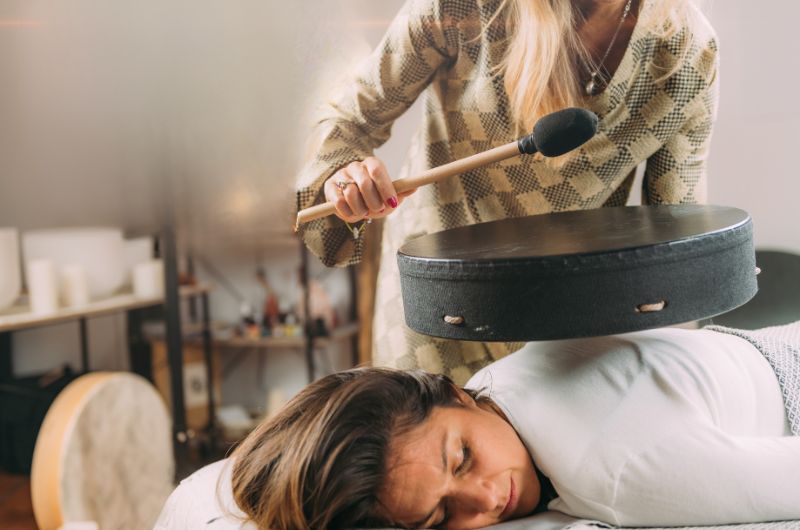
When Body and Mind Become Overloaded – Try Drumming

Forest Spirits and How to Call Them
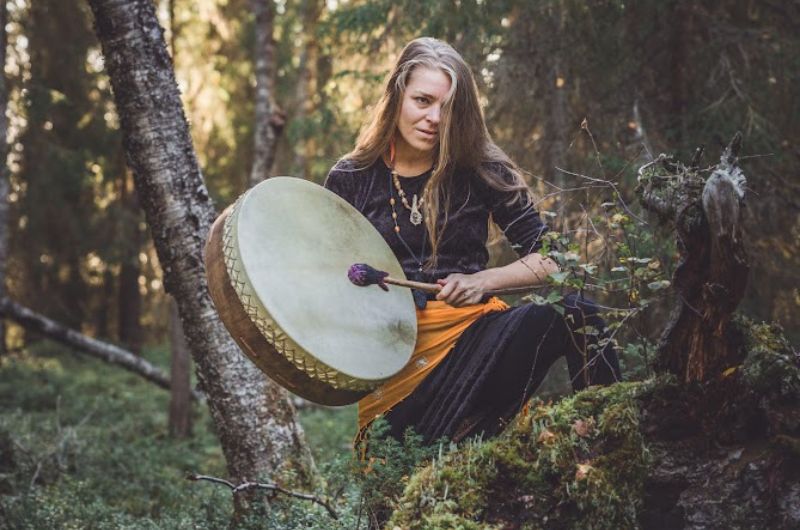
There’s something you should know about us Finns: we never quite stopped believing in magic. Oh, we’ll talk about technology and modern life like anyone else, but scratch the surface and you’ll find we still leave porridge for the house spirits at Christmas, still feel a shiver when walking past certain stones in the forest, and still – perhaps unconsciously – drum in rhythms our great-grandmothers would recognise. You see, when over 70% of your country remains forested and your ancestors spent thousands of years in intimate conversation with the spirits dwelling within those woods, that kind of connection doesn’t simply disappear because someone invented the mobile phone.
The Sacred Rhythms of Sápmi
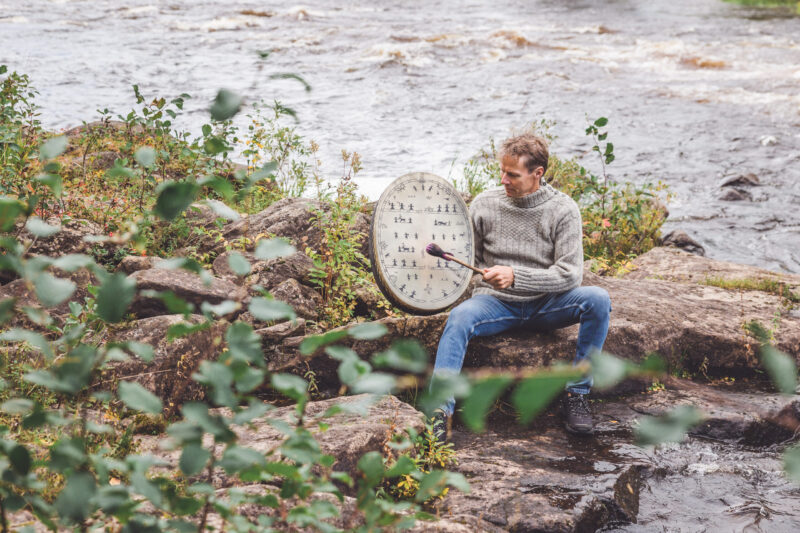
In the vast wilderness of Finnish Lapland, where the aurora borealis dances across endless skies and reindeer migrations have carved pathways through time itself, the haunting resonance of traditional Sami drums once guided shamans between worlds. Today, contemporary craftspeople are breathing new life into this ancient tradition, creating instruments that honour the past whilst speaking to modern souls seeking connection with something deeper than themselves.

Forest Bathing with Your Shamanic Drum
Heart Warriors Unite: Join the Global Drumming Revolution This Lion’s Gate Portal
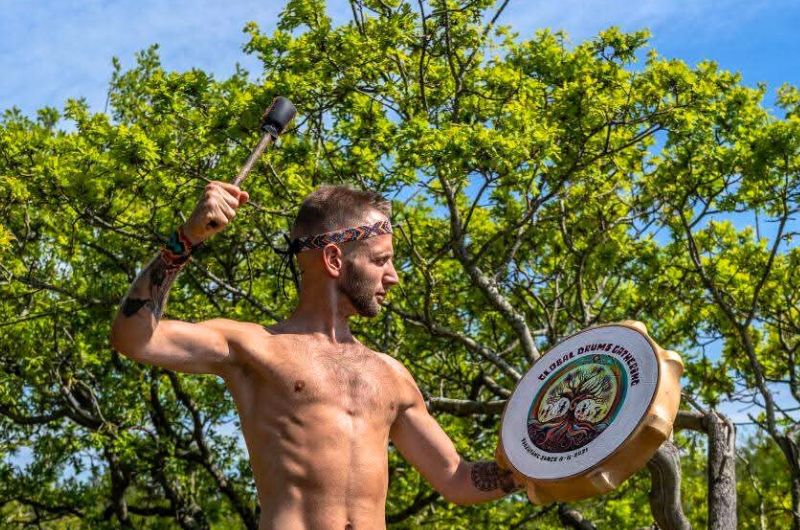
When the thunder of drums ripples across our planet on the Lion’s Gate Portal, something extraordinary happens. The Global Drums Gathering returns on Friday evening 8.8.2025 at 8 PM. This sacred moment begins in New Zealand, and a wave-like energy starts racing clockwise around our beautiful planet. From his shamanic community base in the Netherlands, Dennis Vessies is organising this magical event for the fourth time – and you’re invited to be part of this worldwide tribe!
Everyday Shamanism: How to Easily Deepen Your Nature Connection
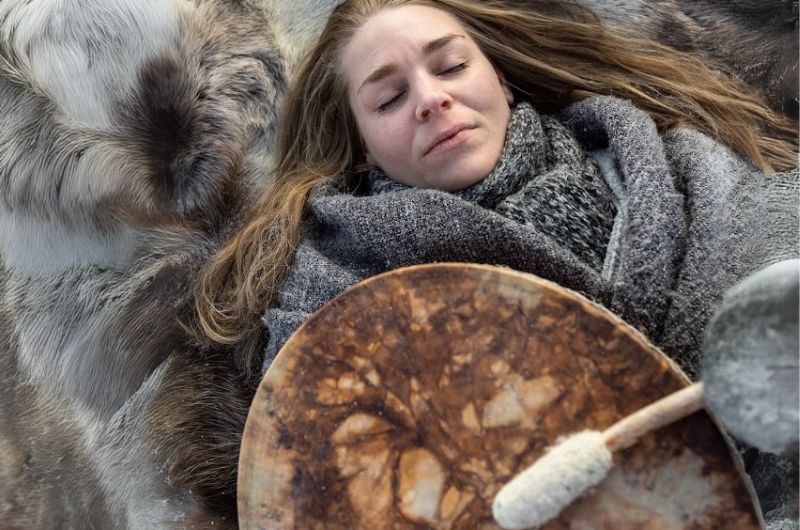
Ancient Vibrations Meets Modern Wellness: Discover Sound Healing
In a world where our senses are constantly bombarded, where screens flicker and notifications ping, there exists an ancient remedy that speaks directly to our very cells: sound healing. This practice, as old as humanity itself yet perfectly suited to our modern needs, offers a natural path to wellness that resonates with practitioners and clients alike.

The Beat of Wellness: Discover the Healing Power of Drumming
In our fast-paced world, feelings of anxiety and frustration can often overwhelm us. Today, we’d like to share a simple yet effective method to combat these negative emotions: drumming!

Embracing the Wisdom of Winter’s Darkness
Here, above the Arctic Circle, darkness envelops us like a thick, warm blanket. The sun now graces us with its presence for six hours a day. While mainstream media bombards us with tips on how to “stay energised” during these dark months, we’d like to offer a different perspective, one that aligns with ancient wisdom and the natural world.
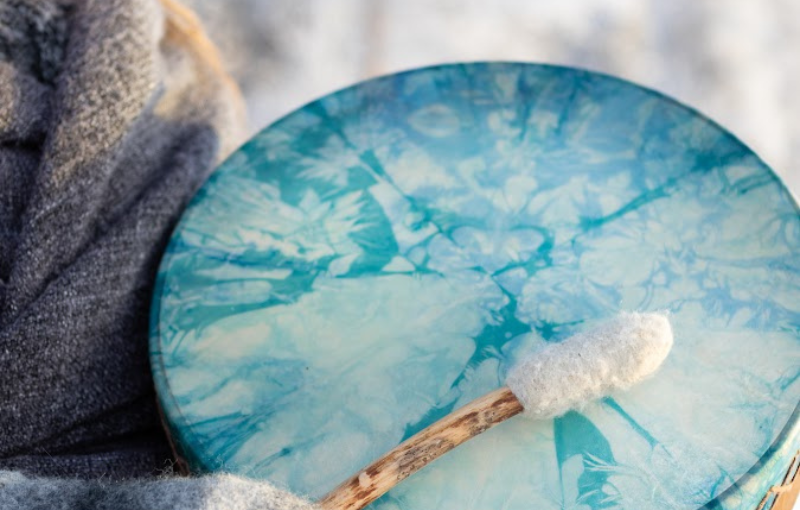
Nordic Shamanism: Arctic Wisdom in a Changing World
In the far reaches of the Nordic countries, where the aurora borealis paints the sky and the midnight sun defies the night, lies the homeland of the Sami people. Their rich spiritual traditions, deeply rooted in the Arctic landscape, offer profound insights that resonate even in our modern world.