
Blog
Where the Trees Still Remember the Old Songs

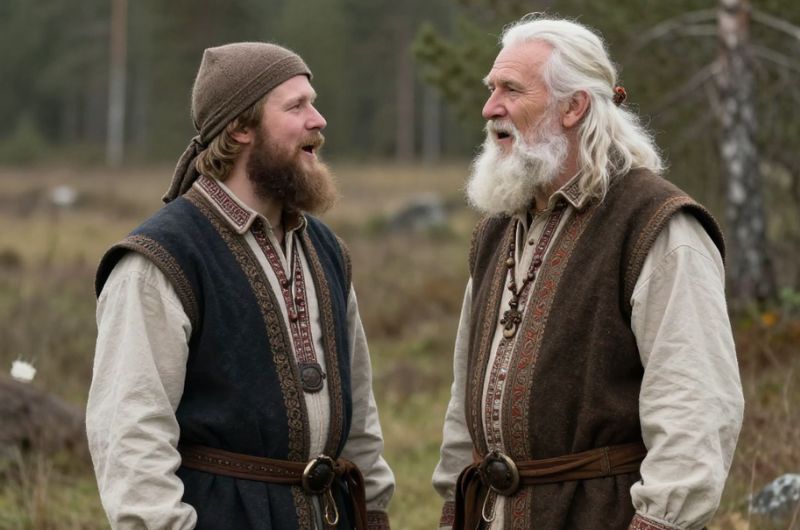
The 28th of February is Kalevala Day in Finland — a day to celebrate our national epic and the deep roots of Finnish culture. As someone who works with ancient rhythms every day, I find it impossible to let this date pass without sharing why this remarkable book still moves me, and why it might move you too.
The Kalevala was compiled by Elias Lönnrot and first published in 1835. He travelled across the wilderness of Karelia and Lapland, collecting ancient poems and songs from ordinary people — fishermen, farmers, healers — who had carried these stories in their voices for generations. What Lönnrot gathered wasn’t just literature. It was memory. It was the Finnish soul, sung aloud.
A world woven from forest and water
What strikes me most about the Kalevala is how completely it is rooted in the natural world. The heroes, like Väinämöinen and Joukahainen who had the epic singing battle, don’t conquer nature — they speak with it, bargain with it, and draw their power from it. Trees have spirits. Lakes answer questions. The forest is not a backdrop; it is a living participant in every story.
This is the worldview that shaped Finnish culture, and it’s still visible in how we relate to the land today. It’s there in the silence of the sauna, in the reverence for the forest, in the way we read the sky. When I stretch reindeer hide over a birch frame to make a drum, I am, in some small way, continuing this same conversation with the natural world that the old songs began.
The ripple that reached Middle-earth
The Kalevala’s influence didn’t stop at Finland’s borders. J.R.R. Tolkien first read it as a young man and was so captivated that he taught himself Finnish just to experience it in the original language. The Kalevala became one of the primary inspirations for his mythology — the story of Turin Turambar in the Silmarillion echoes the tragic fate of the hero Kullervo, and the language of the Elves carries the music of Finnish in its bones.
It’s a remarkable thought: that ancient songs collected from Finnish forest villages would travel into one of the most beloved fantasy worlds ever created. The old knowledge has a way of finding its path forward.
A rhythm you can feel
The Kalevala was never just a book — it was sung. The old poems have a distinctive metre, called the Kalevala metre, an eight-syllable line with a particular rise and fall that mimics the rhythm of the natural world. If you’ve ever sat beside a fire and felt the urge to tap your hand against your knee, you already understand the impulse behind these songs.
A shamanic drum carries something of the same spirit. It isn’t meant to perform. It’s meant to connect — to slow the mind, to open something quiet inside you, to put you back in conversation with the world around you. The early Finns knew this well. The shamans in the Kalevala didn’t only fight battles with swords; they sang the world into shape.
On this Kalevala Day, I hope you find a moment to step outside, listen to whatever the day is saying, and perhaps give it a rhythm of your own.
