
Blog
The Sacred Rhythms of Sápmi

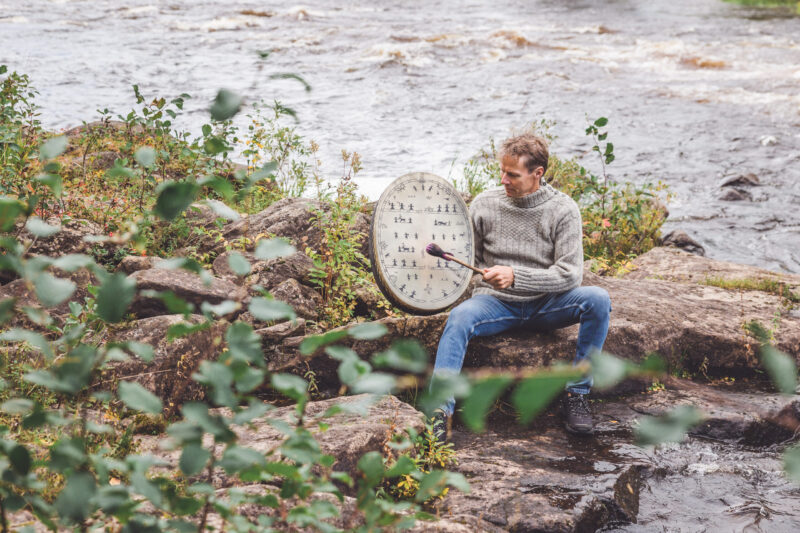
In the vast wilderness of Finnish Lapland, where the aurora borealis dances across endless skies and reindeer migrations have carved pathways through time itself, the haunting resonance of traditional Sami drums once guided shamans between worlds. Today, contemporary craftspeople are breathing new life into this ancient tradition, creating instruments that honour the past whilst speaking to modern souls seeking connection with something deeper than themselves.
The relationship between the Sami people and their drums transcends mere musicality—it represents one of humanity’s most profound partnerships between culture, spirituality, and the natural world. For centuries, these circular portals served as the beating heart of Sami spiritual life, their rhythmic voices carrying messages between the earthly realm and the spirit world that permeates every aspect of Arctic existence.
The Shaman’s Gateway
The runebommer, as these sacred drums were known, held a position of extraordinary reverence within Sami society. Far more than instruments, they functioned as sophisticated spiritual technologies operated by noaidis—the traditional shamans whose mastery of these circular universes granted them passage to otherworldly realms. When a noaidi struck the drum with a bone or antler hammer, the reverberations didn’t merely create sound; they opened doorways to ancestral wisdom, healing knowledge, and prophetic visions essential for community survival in one of Earth’s most demanding environments.
Each drum represented a complete cosmology mapped onto taut reindeer hide. The central sun symbol radiated outwards to encompass the three worlds of Sami understanding: the upper realm of beneficial spirits, the middle world of daily existence, and the lower domain where ancestors dwelt alongside earth spirits. Rivers, mountains, sacred sites, and the pathways between worlds were meticulously painted using pigments derived from local plants and minerals, creating a navigation system for spiritual journeys.
The construction process itself embodied sacred principles. Shamans would select birch trees through divination, believing the wood retained the tree’s living spirit. Reindeer, central to Sami existence, provided hide that had absorbed the essence of endless migrations across sacred landscapes. The completed drum thus became a living entity containing multiple layers of natural and spiritual energy, capable of facilitating communication with the vast network of spirits inhabiting the Arctic world.
Voices of the Landscape
The symbols adorning drum surfaces weren’t decorative elements but functional spiritual maps reflecting the Sami people’s intimate relationship with their environment. Each marking corresponded to specific locations, spirits, or concepts vital to survival and spiritual understanding. The Tree of Life connected all three cosmic realms, whilst representations of bears, wolverines, and ptarmigan acknowledged the spiritual essence residing within Arctic fauna.
Sacred sites held particular significance in drum iconography. Sieidi—naturally formed rocks and unusual landscape features believed to house powerful spirits—were carefully marked on drum surfaces alongside traditional dwelling places, fishing grounds, and seasonal migration routes. This integration of practical and spiritual geography demonstrates how thoroughly Sami worldview embraced the interconnectedness of material and metaphysical existence.
The drum’s voice itself carried deep meaning within Sami understanding. Different striking techniques, rhythmic patterns, and the movement of a small bone pointer across the drum surface during divination created a sophisticated communication system. Shamans interpreted how the pointer settled after drumming ceased, reading messages from spirit guides about weather patterns, animal movements, illness causes, or appropriate actions for community challenges.
Echoes Across Time
The brutal suppression of Sami spiritual practices during Christianisation campaigns led to the destruction of countless drums, with surviving examples now precious museum artefacts. Yet the cultural memory of these sacred instruments persisted within Sami communities, preserving knowledge that would eventually contribute to contemporary revival efforts.
Modern interpretations of Sami drums, whilst created by non-shamanic craftspeople, represent a respectful dialogue between traditional knowledge and contemporary spiritual seeking. Finnish Lapland artisans working today source materials following principles that echo ancestral practices—selecting local birch whose double-layered strength provides both durability and resonance, whilst ensuring reindeer hide comes from ethical suppliers maintaining traditional relationships with these remarkable animals.
The contemporary drums emerging from these workshops carry forward essential elements of their predecessors. Hand-drawn symbols retain their mysterious power to evoke deep psychological responses, whilst the instruments’ construction using traditional materials creates authentic tonal qualities that can facilitate meditative states and introspective journeys. Though they may not serve identical ceremonial functions to historical drums, these modern iterations offer pathways to experiences that transcend ordinary consciousness.
The Living Tradition
Today’s drum makers approach their craft with profound respect for Sami cultural heritage whilst acknowledging their position outside traditional shamanic lineages. The instruments they create serve as bridges between ancient wisdom and contemporary spiritual exploration, offering individuals opportunities to connect with rhythmic practices that have facilitated human transcendence for millennia.
The deep, penetrating tones produced by reindeer hide stretched across birch frames seem to bypass rational thought, speaking directly to something primal within human consciousness. Users frequently report that drumming creates spaces for meditation, healing, and creative inspiration that feel surprisingly familiar despite being newly encountered. This suggests that the fundamental human responses these instruments evoke transcend specific cultural contexts whilst honouring their origins.
The environmental consciousness embedded in traditional Sami practices resonates strongly with contemporary concerns about sustainable living and respectful resource use. Modern drum makers following traditional material sourcing demonstrate how ancient ecological wisdom can inform contemporary craftsmanship, creating beautiful objects whilst maintaining ethical relationships with the natural world that provides their raw materials.
The symbols painted on contemporary drums invite personal interpretation whilst respecting their cultural origins. Tree of Life imagery, animal spirits, and cosmological patterns speak to universal human experiences of connection with nature, ancestral wisdom, and the search for meaning beyond material existence. Each drum becomes unique through the interplay between traditional motifs and individual artistic expression, creating instruments that honour the past whilst serving present needs.
As interest in shamanic practices, traditional crafts, and nature-based spirituality continues growing, these contemporary Sami drums offer authentic entry points into practices that have sustained human communities through countless generations. They invite us to slow down, listen deeply, and remember our connections to the rhythms that pulse through all living systems—from heartbeat to seasonal cycles to the cosmic dance of which we’re all part.
In striking these drums, we don’t simply create sound; we participate in conversations between human consciousness and the wider web of existence that traditional peoples never forgot. The voice that emerges speaks in languages older than words, carrying messages our ancestors would recognise even as it addresses contemporary longings for meaning, connection, and transcendence in an increasingly disconnected world.
Related Posts

The Forest Listens — The Karelian Lament Tradition

There are things that are hard to say out loud. Grief that doesn’t fit into words. Exhaustion too deep to explain. Feelings that circle inside us with nowhere to go.
Throughout human history, people have taken these things into nature. Not because nature provides answers. But because it receives. Quietly, without judgement, without advice.
Finding Love in Unexpected Places: Your Drum as a Companion
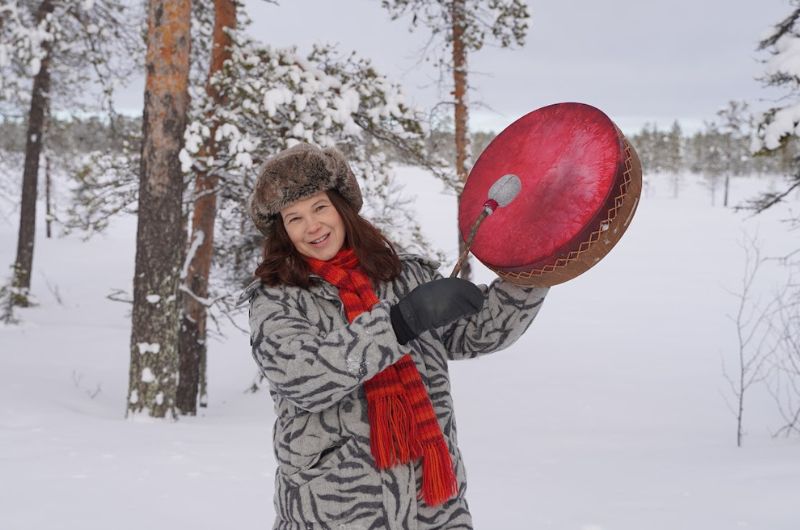
With Valentine’s Day approaching, I’ve been reflecting on friendship, connection, and the many forms love takes in our lives. Here in Finland, we actually celebrate this day a bit differently – we call it Ystävänpäivä, Friend’s Day. Rather than focusing solely on romantic love, we honour all the meaningful connections in our lives: friends, family, and yes, even the relationship we have with ourselves.
The Power of Words: The Finnish Tietäjä Tradition
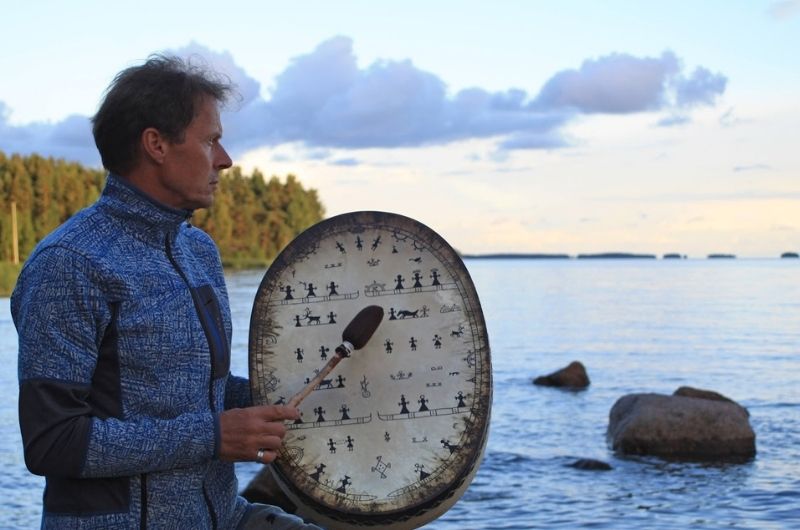
Have you ever noticed how certain words, when spoken with intention, seem to carry weight? How a whispered blessing can calm a crying child, or how the right phrase at the right moment can shift an entire day? The old Finnish shamans – the tietäjät – knew this intimately. They were called “the knowing ones” not because they possessed secret knowledge, but because they understood something profound: words, when combined with rhythm and intention, become medicine.
Christmas Panic Approaching – Remember This!

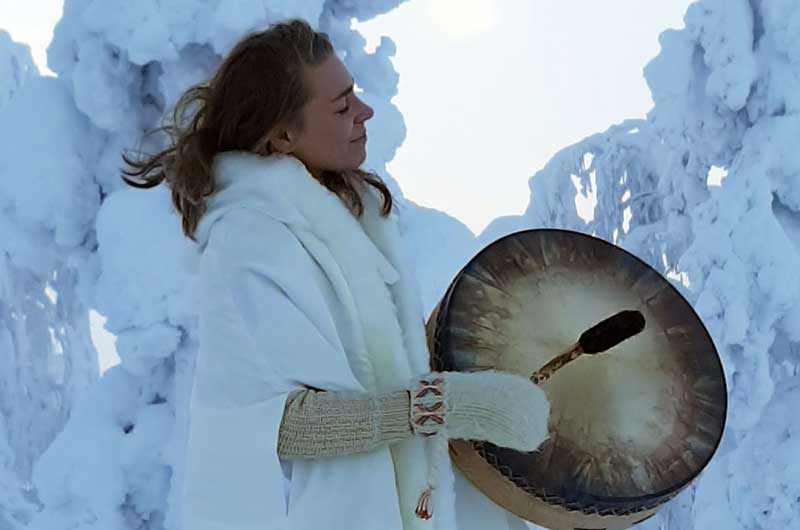
As Christmas draws near, panic tends to strike. Is everything ready? Is everything tip-top, corners scrubbed, and casseroles prepared? Everything should be more finished, tidier, and “just right.” Meanwhile, the to-do list grows longer, even though this time of year our souls long to slow down.
How Working with Your Hands Brings Deep Wellbeing
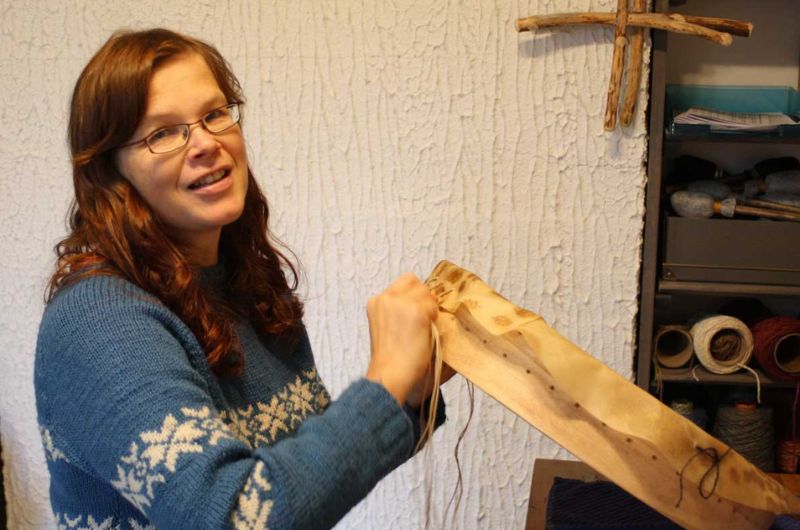
Have you ever lost yourself so completely in a task that hours felt like minutes? Where the outside world faded away, and there was only you, your hands, and something beautiful taking shape before your eyes? Here at Rumpu-ukko, we experience this magic almost daily. When I’m crafting a new shamanic drum – stretching the reindeer hide, adjusting the tension just so, listening to the first tentative beats – time simply disappears. My mind quiets. My breath slows. The constant mental chatter that usually fills my head fades into silence. It’s not work in the traditional sense. It’s flow. It’s meditation. It’s joy.
And as it turns out, science is now confirming what craftspeople, artisans, and makers have known in their bones for millennia: working with your hands is extraordinarily good for you – not just physically, but mentally, emotionally, and even spiritually.
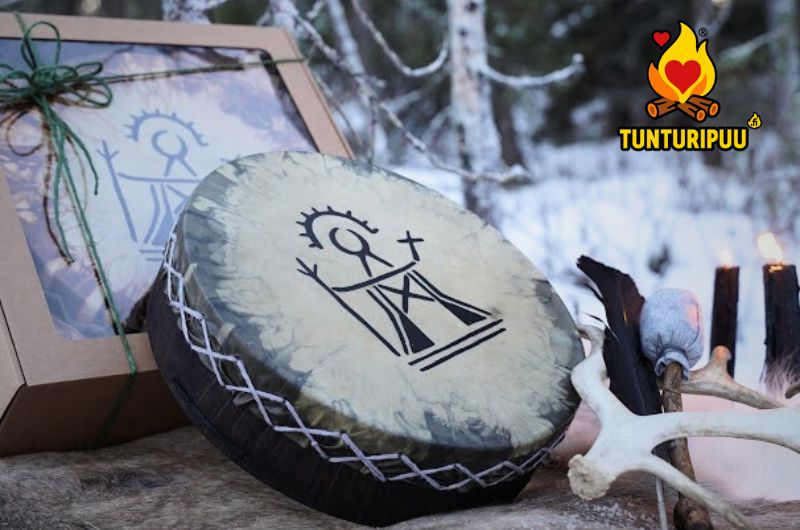
Rumpu-ukko´s Sami Drums Now Available at Tunturipuu Online Store

When Body and Mind Become Overloaded – Try Drumming

Forest Bathing with Your Shamanic Drum
Heart Warriors Unite: Join the Global Drumming Revolution This Lion’s Gate Portal
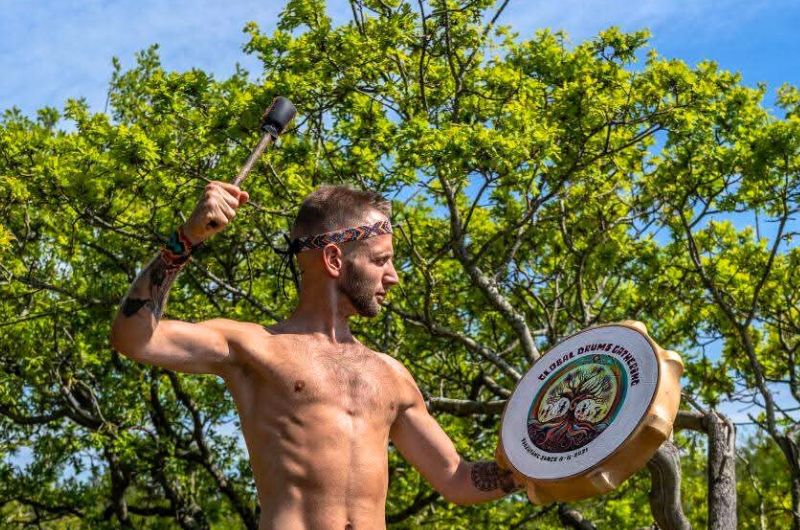
When the thunder of drums ripples across our planet on the Lion’s Gate Portal, something extraordinary happens. The Global Drums Gathering returns on Friday evening 8.8.2025 at 8 PM. This sacred moment begins in New Zealand, and a wave-like energy starts racing clockwise around our beautiful planet. From his shamanic community base in the Netherlands, Dennis Vessies is organising this magical event for the fourth time – and you’re invited to be part of this worldwide tribe!
Everyday Shamanism: How to Easily Deepen Your Nature Connection
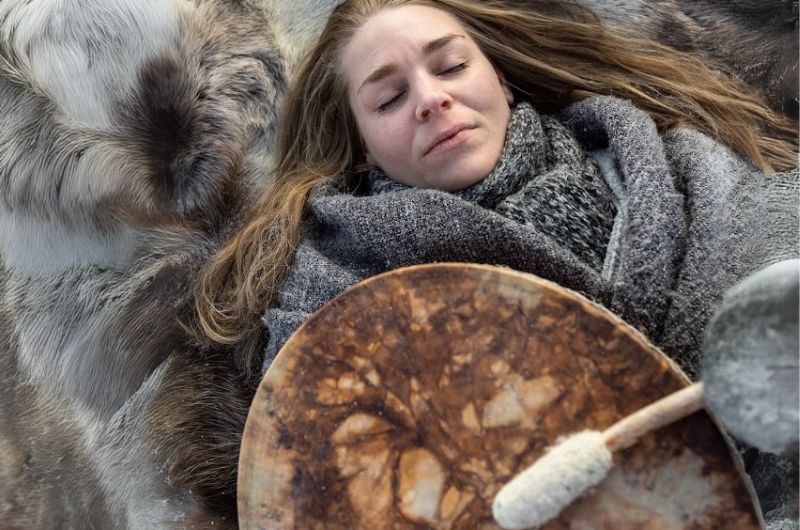
Ancient Vibrations Meets Modern Wellness: Discover Sound Healing
In a world where our senses are constantly bombarded, where screens flicker and notifications ping, there exists an ancient remedy that speaks directly to our very cells: sound healing. This practice, as old as humanity itself yet perfectly suited to our modern needs, offers a natural path to wellness that resonates with practitioners and clients alike.

The Beat of Wellness: Discover the Healing Power of Drumming
In our fast-paced world, feelings of anxiety and frustration can often overwhelm us. Today, we’d like to share a simple yet effective method to combat these negative emotions: drumming!
